
How to Choose a Piano for Your Sound and Space
The piano with the biggest sound isn’t automatically the right one for your home. To learn how to choose a piano, listen for a tone you enjoy, feel whether the keys respond comfortably, and notice how much control you have from soft notes to loud ones. That range of expression, called dynamic range, helps you shape a melody instead of playing at one volume.
It’s natural to focus first on a piano’s appearance or brand, but how it feels and sounds under your hands matters just as much. This guide will help you assess touch, tone, and dynamics by playing familiar music, consider how the instrument’s volume will suit your room, and weigh the space and sound tradeoffs of acoustic pianos. With thoughtful listening and comparison, you can narrow your options to a piano that suits both your playing and your space.
Key Takeaways
- Play familiar music at different tempos and volumes to judge whether the keys respond comfortably and the tone suits your ear.
- Think about the room’s size and acoustics, since a piano’s volume and tone should feel comfortable in the space where you’ll play.
- Compare acoustic piano types by considering how their construction affects sound, feel, and fit in your home.
- Weigh an acoustic piano’s expressive sound and tactile response against the space and ongoing care it may require.
1. Assessing touch, tone, and dynamic response
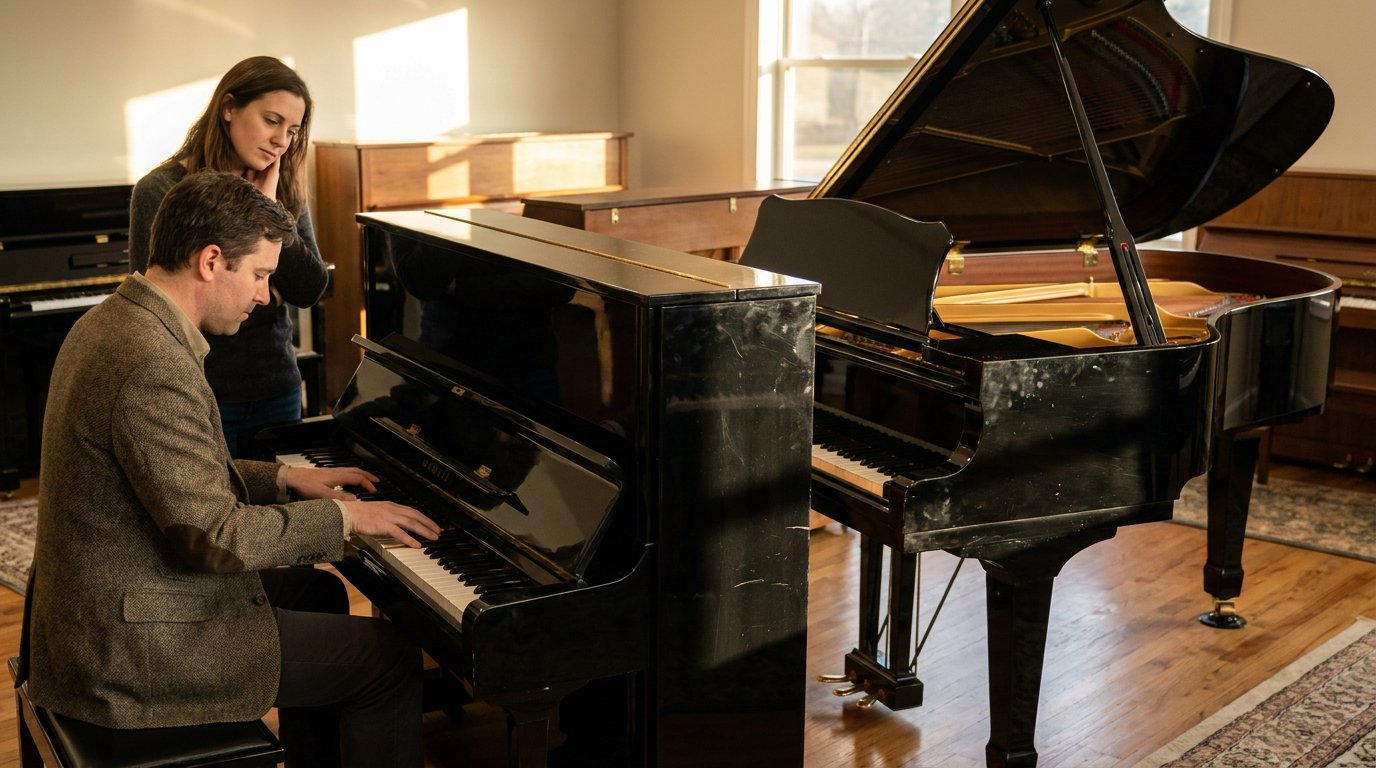
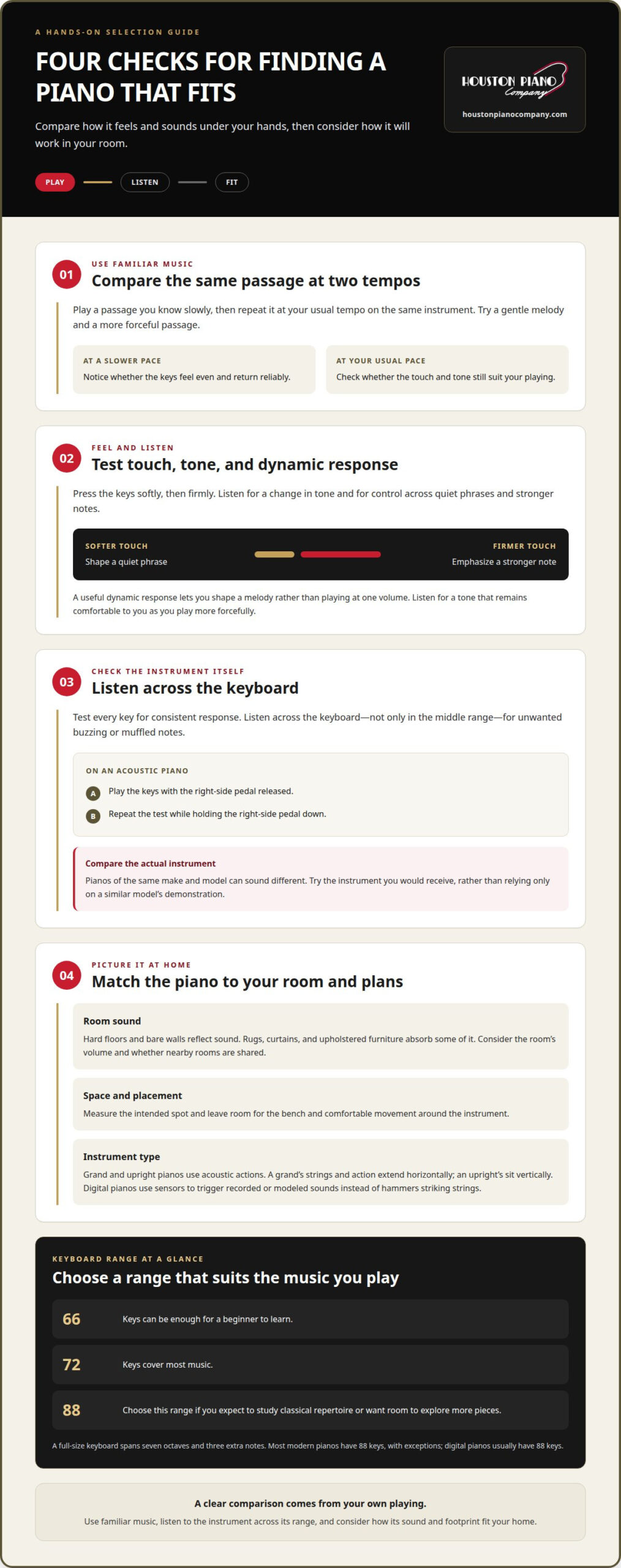
Start with a familiar passage: play it slowly, then repeat it at your usual tempo. Use the same instrument for both attempts so you can notice whether the keys feel even and return reliably. Press softly, then firmly, and listen to how the tone changes. A piano with a useful dynamic response lets you shape a quiet phrase and emphasize a stronger note without losing control.
Used piano prices vary with the instrument’s age, make, type, and condition. To assess its condition, test every key for consistent response, buzzing, or muffled sounds, both with and without the right-side pedal held down.
Bring music you know in contrasting styles, such as a gentle melody and a more forceful passage. Try each at different tempos and notice whether the touch and tone still suit you. A piano may sound warm in a soft passage but harsh when played loudly, or feel responsive at a slow pace but tiring in quicker music. Your own playing gives you a clearer comparison than a brief demonstration.
For a digital piano, prioritize a key action that feels comfortable under your fingers, pedals that support the playing you want to do, and speakers that sound clear at different volumes. A digital piano usually has 88 keys; a full keyboard is especially useful for classical repertoire. Beginners can learn on fewer keys, but consider whether the range will suit the music you hope to play.
Listen for unwanted buzzing or muffled notes across the keyboard, not just in the middle range. On an acoustic piano, repeat the test with the right-side pedal held down, then release it and play again. If you’re comparing instruments of the same make and model, play each one because they can sound different. When choosing a piano, make sure the instrument you try is the one you’ll receive. That grounds your decision in its actual touch and tone, rather than the sound of a similar model.
2. Considering how a piano will sound in your space
A piano’s volume and tone can change how a room feels. Hard floors and bare walls reflect sound, while rugs, curtains, and upholstered furniture absorb some of it. Consider where you’ll play and whether nearby rooms are shared. These details help you picture how the piano will sound during everyday practice, not just in a showroom.
Renting can suit a temporary need, buying used offers a pre-owned option, and buying new lets you select a new instrument. Part of how to choose a piano is matching that decision to your playing plans and how long you expect to use it.
There’s no single new-piano price that fits every buyer. The total depends on the piano’s type and specifications, while delivery and setup depend on the instrument and delivery arrangements.
Tuning costs vary with a piano’s condition and the work required.
A used piano may have uneven keys, buzzing, muffled notes, or hidden condition issues. An instrument more than 50 years old may require substantial repairs, and a certified piano technician’s inspection can help assess a piano bought from an individual seller.
To think through how to choose a piano, weigh its sound against the room’s furnishings and the volume that feels comfortable there. A hands-on piano comparison can help you hear how different instruments suit your space.
Keep the room in mind as you consider different pianos. Consider how an instrument’s volume and tone will suit the room where you plan to use it. The aim is to choose a piano whose sound feels appropriate for that space, rather than relying only on how it sounded somewhere else.
3. Acoustic piano mechanics and types
An acoustic piano makes sound through a mechanical action: pressing a key moves a hammer that strikes a string. The strings vibrate, and the instrument’s soundboard helps carry those vibrations into the room. The modern piano action was first invented in 1709. This mechanism gives acoustic pianos a direct connection between finger movement and sound, though each instrument has its own feel.
Most modern pianos have 88 keys, with exceptions including Bösendorfer and Stuart & Sons pianos, according to Wikimedia Foundation. A full-size keyboard spans seven octaves and three extra notes. For a beginner, 66 keys can be enough to learn; 72 keys cover most music. Choose 88 keys if you expect to study classical repertoire or want room to explore more pieces.
Grand and upright pianos use acoustic actions, but their shapes affect how they fit and project sound. A grand piano’s horizontal strings and action extend across the instrument, while an upright piano’s strings and action sit vertically. The grand vs upright piano decision often comes down to space and playing priorities. Uprights are often considered for homes where floor space matters; a grand may suit a room with space for its longer footprint. Compare their touch and tone in person rather than choosing by shape alone.
Digital pianos work differently: sensors register key movement and trigger recorded or modeled sounds, rather than hammers striking strings. They’re generally easier to move and don’t need acoustic tuning, while acoustic instruments offer the response of vibrating strings and a soundboard. Both can support home playing, but their feel, sound, care, and portability differ. Consider your room, preferred touch, and willingness to maintain an acoustic instrument together.
Before deciding, measure the intended spot and leave room for the bench and comfortable movement around the instrument. Then compare an upright, a grand, or a digital model using the music you expect to play. The right type is the one that fits your space and makes practice inviting.
4. Benefits and drawbacks of acoustic pianos
An acoustic piano creates sound through vibrating strings, hammers, and a soundboard. That physical response gives musicians a direct connection between key pressure and tone. A gentle touch can produce a quiet phrase, while a firmer attack brings more presence. The changing sound comes from your playing, not a volume setting, which can make expressive practice especially engaging.
An acoustic piano doesn’t need a speaker system to produce its sound. Its resonance fills the room naturally, and its touch offers a distinct alternative to a digital keyboard. These qualities can make an acoustic instrument rewarding for daily practice, lessons, or repertoire that calls for subtle changes in dynamics.
That expressive response comes with practical considerations. Acoustic pianos are substantial instruments, so their footprint and placement matter at home. Moving one requires planning, and a room’s furnishings affect how its sound carries. A grand piano needs space for its horizontal shape; an upright’s vertical design may suit a tighter room.
Ongoing care is another tradeoff. Unlike a digital instrument, an acoustic piano relies on strings and mechanical parts, so its condition and care affect how it performs. Factor maintenance into your decision alongside the instrument’s placement, use, and sound.
To decide whether an acoustic piano fits, weigh its tactile response and natural resonance against the space and ongoing upkeep you can accommodate. If those qualities suit your home and playing goals, explore acoustic piano options as you compare instruments.
For a used instrument, check that every key works without buzzing or muffled sounds, with and without the right-side pedal held down.
Houston Piano Company
Houston Piano Company can help you compare piano options and turn your listening and space preferences into a practical choice. Explore new and used pianos, including trusted Yamaha models, and consider how each instrument’s touch, tone, and size fit your playing plans and home.
Bring your questions about acoustic piano types, key response, and the sound you prefer. A hands-on comparison can make differences easier to hear and feel, whether you’re choosing your first instrument or replacing one you’ve played for years. Contact Houston Piano Company to discuss your piano search.
Choose the Piano You’ll Grow With
Knowing how to choose a piano is less about finding a universally “best” instrument and more about identifying one you’ll want to return to. Let your priorities guide your decision: the music you enjoy, the feel you prefer beneath your hands, and the role the piano will have in your home. A thoughtful choice can suit the player you are today while leaving room for your musical interests to grow.
Take a moment to picture ordinary playing, not only a special occasion: where you’ll sit, when you’ll practice, and what would make you look forward to returning to the keys. Those everyday details can bring your preferences into focus. If you’re ready to talk through your piano search, contact Houston Piano Company. There’s no need to rush the decision. Let your next step be a chance to explore, listen, and find an instrument that feels like yours.
Frequently Asked Questions
What is dynamic range and why is it important?
Dynamic range is the span between the softest and loudest sounds a piano can produce under a player’s control. It matters because musicians use changes in volume to shape phrasing and bring a melody forward. For example, a quiet opening followed by a fuller passage can create contrast without changing the notes. Try playing the same phrase gently, then with more energy.
What are the main types of pianos: acoustic upright, grand, and digital?
An acoustic upright has vertically arranged strings and action, while a grand piano has a horizontal design. Both create sound mechanically when hammers strike strings. A digital piano produces sound electronically instead. An upright may suit a room with limited floor space; a grand needs room for its longer shape. Digital models can be easier to move between rooms.
What should I check when testing a piano before buying it?
Play a scale from the lowest notes to the highest, then try repeated notes and chords. Listen for keys that respond unevenly or notes that sound noticeably different from neighboring ones. Test the pedals while playing a short passage, and sit at the instrument long enough to notice whether the bench height and key feel suit your posture.
What room conditions and space requirements should I consider for an acoustic piano?
Measure the intended spot for the specific piano, then account for the bench and space to sit or move around it. Check the route from the entrance to the room, including hallway turns and doorways. Avoid placing the instrument beside a heat source or in direct sunlight. A room’s furnishings and surfaces can also affect how its sound carries.