
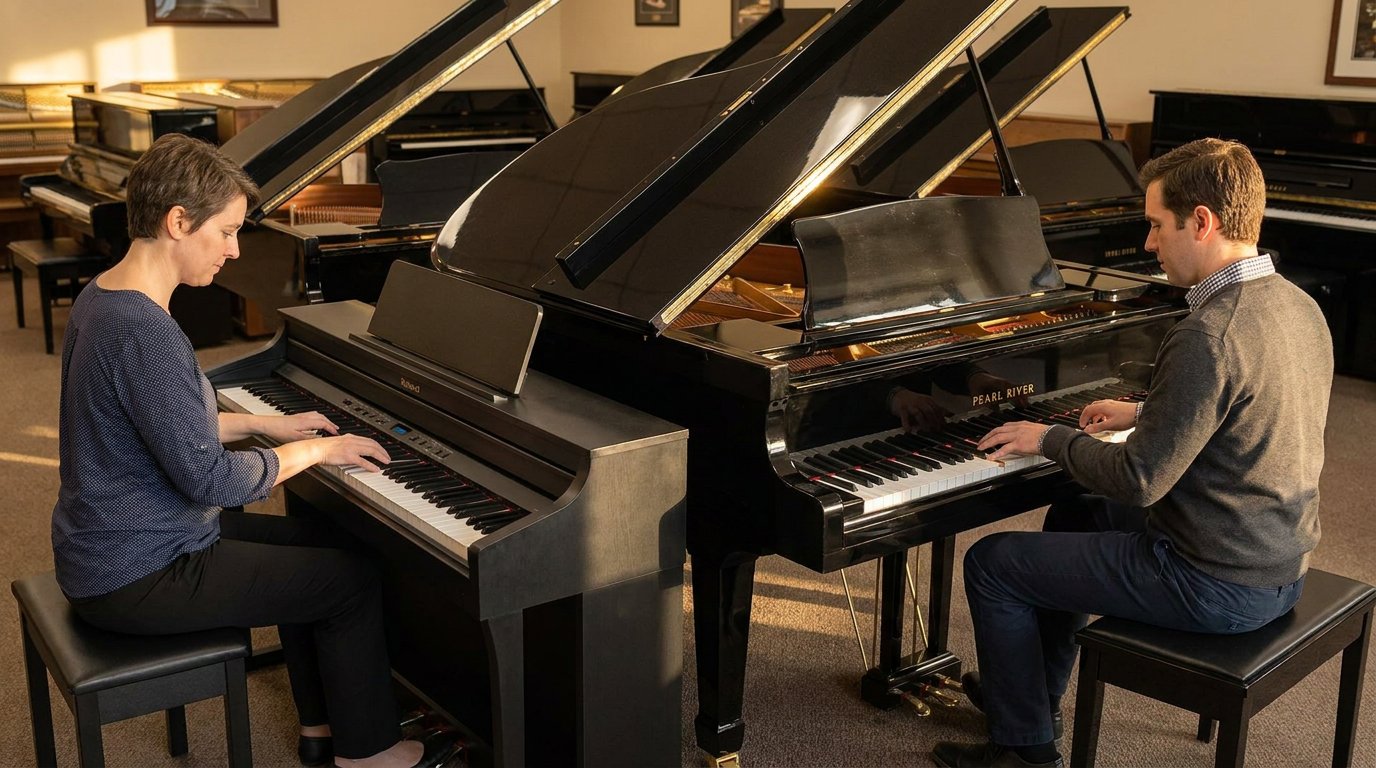
Electric Piano vs Acoustic Piano: Which Fits Your Lessons
A digital piano can be a sound choice for serious lessons, but it won’t reproduce an acoustic piano’s full resonance. When deciding electric piano vs acoustic, which to buy depends on your practice needs: a weighted-key digital piano offers useful flexibility, while an acoustic responds with the layered resonance of vibrating strings.
It’s natural to focus on sound and feel when choosing an instrument for lessons. Both types can support learning, but their playing experience, practice features, space needs, and upkeep differ in ways that may shape your routine.
This guide explains how each piano makes sound, what touch and resonance mean for playing, and which features can support practice. Use it to match an instrument to your lessons, home, and musical goals.
Key Takeaways
- Match the piano to your lesson goals: a weighted-key digital can support serious practice, while an acoustic offers a distinct response from its strings and action.
- Consider whether extra sounds, recording tools, or keyboard splitting would make practice more engaging and useful for your music.
- Compare touch sensitivity and playing feel in person, since digital keyboards vary and the right response depends on what feels comfortable to you.
- Listen for the acoustic’s resonance and harmonics, which add layers of sound as you play and can shape the character of each note.
How acoustic and digital pianos produce sound
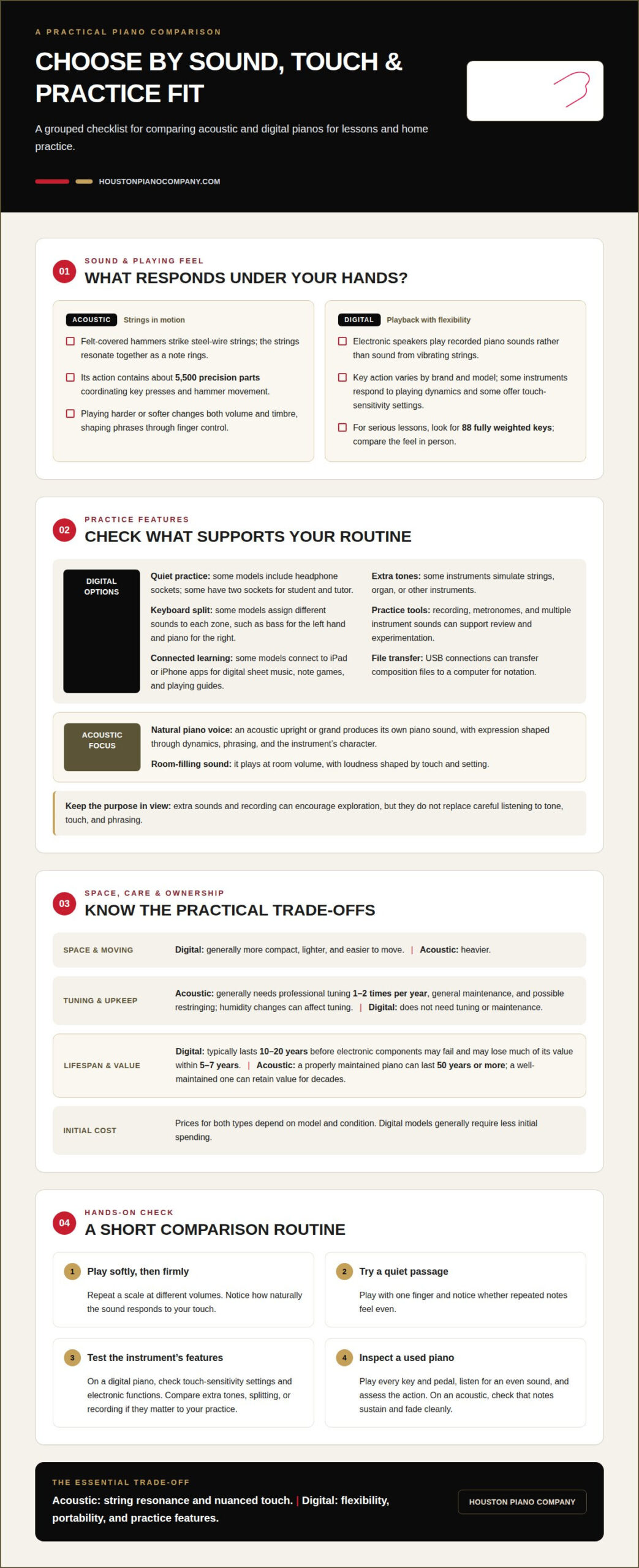
An acoustic piano makes sound when felt-covered hammers strike steel-wire strings. Its action contains about 5,500 precision parts, coordinating a key press with the hammer’s movement. The strings resonate together, so the sound has changing layers as a note rings. A digital piano uses electronic speakers to play recorded piano sounds instead. It can simulate other instruments, but its sound comes from playback, not vibrating strings.
Touch matters on a digital piano, too. Some digital pianos are designed to respond to playing dynamics, helping their touch feel more like an acoustic instrument. Key action varies by brand and model, so try notes across the keyboard at different volumes. Some models connect to iPad or iPhone apps for digital sheet music, note games, and playing guides. USB connections can also transfer composition files to a computer for notation.
Digital pianos are generally more compact, lighter, and easier to move. Prices for digital and acoustic pianos depend on model and condition, though digital models generally require less initial spending. Compare features and key action as well as the instrument’s condition.
Acoustic pianos generally need professional tuning 1-2 times per year, plus general maintenance and possible restringing. Humidity changes can affect tuning. Digital pianos don’t need tuning or maintenance. A digital piano typically lasts 10 to 20 years before electronic components may fail; a properly maintained acoustic can last 50 years or more. Digital models may lose much of their value within five to seven years, while a well-maintained acoustic can retain value for decades.
When considering a used piano, play every key and pedal, listen for an even sound, and assess how the action feels. On a digital model, test the keys and electronic functions. On an acoustic, listen for notes that sustain and fade cleanly.
| Option | Sound and action | Space and care | Useful for |
|---|---|---|---|
| Acoustic | Hammers strike strings | Heavier; needs tuning | String resonance and nuanced touch |
| Digital | Speakers play recorded sound | Compact; no tuning | Apps, portability, and varied sounds |
Weigh an acoustic’s string response against a digital piano’s flexibility, space-saving design, and practice features.
Extra sounds and keyboard splitting
A digital piano can offer more than piano tones, and some models include headphone sockets for quiet practice. Two sockets on some models let a student and tutor listen together. An acoustic piano plays at room volume, with loudness shaped by touch and the setting. Headphones make private digital practice easier, while an acoustic’s sound fills the room.
Extra sounds let players explore music beyond a solo piano part. A digital instrument may simulate strings, organ, or other instruments, so a student can hear how a melody changes with a different tone. An acoustic upright or grand produces its own piano sound, helping players develop expression through dynamics, phrasing, and the instrument’s natural character.
Some digital keyboards split into two zones, assigning a different sound to each section. A student, for example, could play a bass sound with the left hand and piano with the right. This can make practice more engaging and help players explore ensemble parts. It can also help a teacher demonstrate separate musical roles across one keyboard.
Recording functions offer another practice tool. Players can record a passage, listen back, and notice timing or balance that may be harder to hear while performing. Metronomes can help maintain a steady beat, while multiple instrument sounds let learners experiment with arrangements. These features encourage exploration, but don’t replace careful listening to tone, touch, and phrasing.
Sound quality depends on what you want to hear and play. A digital piano’s variety and recording tools suit experimentation; an acoustic piano’s single voice encourages attention to changes in touch and musical line. Try a piano sound first, then test extra tones, splitting, and recording if those features matter to your practice. A hands-on piano comparison can help you notice which sound and features feel inspiring.
Acoustic or Digital?
Beginners and children can learn on either type; a digital piano for serious lessons should have 88 fully weighted keys. Compare how each keyboard responds to a light finger touch and a firmer press. If you’re deciding whether to buy an electric piano or an acoustic piano, start with the playing feel your lessons require. For a broader comparison of the best piano for a beginner, including acoustic pianos, digital pianos, and keyboards, consider how each option fits your goals and space.
Acoustic Piano Touch and Playing Feel
An acoustic piano’s action links each key to a hammer, giving the player a direct physical response. Playing harder or softer changes both volume and timbre, allowing a student to shape a musical phrase through finger control. This response comes from the instrument’s mechanical action, not speakers or adjustable electronic settings.
Digital Piano Touch and Playing Feel
Digital pianos vary by manufacturer and model, so weighted keys don’t all feel alike. Yamaha digital pianos use hammers to detect playing dynamics, creating a touch response closer to an acoustic piano. Some digital models let players adjust touch sensitivity to suit a lighter or firmer playing preference, while offering access to different sounds.
Use a short comparison routine: play a scale softly, repeat it firmly, then try a quiet passage with one finger. Notice whether the sound responds naturally to your touch and whether repeated notes feel even. On a digital instrument, test sensitivity settings if available. On an acoustic, listen for changes in volume and tone.
For lessons, weighted keys help develop control across the keyboard, while touch sensitivity affects how playing force shapes the sound. A beginner preparing for piano exams can practise on a weighted-key digital piano. Children may find volume control useful at home, while an acoustic suits families who want responsive action and room-filling sound.
There’s no single best choice for every student. If you’re weighing an electric piano versus an acoustic, consider whether volume control or the direct response of hammers and strings better suits your routine. Play the same scale and song on both, then choose the action that supports comfortable, controlled playing.
Acoustic piano resonance and harmonics
An acoustic piano’s strings create more than the note struck by a hammer. When one string vibrates, other strings can resonate, adding related tones that enrich the piano’s timbre. This sympathetic resonance helps explain why a chord can sound fuller than separate notes, even when the player strikes only some of its keys.
Harmonics are higher-frequency components that give a note its particular color. On an acoustic piano, the strings and soundboard interact as notes ring, so the instrument responds to the player’s touch and to other sounding notes. Change the voicing or let a chord overlap, and the combined resonance changes. The result is a musical texture that develops throughout the room, not just at the keys.
A digital piano produces sound through playback, reproducing recorded piano tones without strings vibrating in the room. Its speakers deliver the selected sound, and volume control makes quieter practice easier. But playback doesn’t create the same live interaction among strings. That difference matters most to players who want to shape delicate layers and hear notes blend naturally.
Try a simple comparison: play a chord, hold it, and listen as the notes overlap. Then play the same chord on a compact digital piano and notice how it sounds through the speakers. An acoustic piano’s resonance can reward advanced playing, while a digital instrument offers practical control and consistent sound at different volume levels.
For a choice guided by resonance, listen to both instruments in person and compare how each handles a soft chord and a full passage. Explore acoustic pianos and hear their resonance as you consider which response suits your musical goals.
Houston Piano Company
Houston Piano Company offers new and used pianos to help you compare how sound, touch, and practice features fit your lessons and musical goals. Comparing acoustic and digital options in person can make differences in response and tone easier to understand.
Explore new and used pianos, including Yamaha instruments, as you consider what suits your playing, space, and routine. There’s no single right choice for every student. The best match supports the music you want to make.
Contact Houston Piano Company to talk through your piano decision.
Choose the piano that supports your next musical step
Your first piano doesn’t have to define every musical direction you’ll take. Think about the pieces you hope to learn, the sound that draws you in, and the practice routine you can sustain. These priorities make the choice more personal than a simple comparison of features.
If you’re deciding which electric or acoustic piano to buy, picture an ordinary practice session, not just an exciting first visit. Consider what will make you want to sit down again: exploring different sounds, developing a nuanced touch, or hearing your playing fill the room. A good match should feel inviting now while leaving room for your skills and interests to grow.
Give yourself permission to choose by feel as well as by practical needs. Listen, play a passage you know, and notice which instrument makes you curious to continue. For a thoughtful next step, talk with Houston Piano Company about your piano decision. Your musical path starts with the instrument that makes you eager to play.
Frequently Asked Questions
Is a digital piano good enough for serious piano lessons?
Yes, a digital piano can support serious lessons if its keyboard suits the student’s curriculum and practice needs. Bring current lesson pieces to a trial and play scales, repeated notes, and soft-to-loud passages. This reveals whether the action supports developing control. If lessons focus on particular repertoire or exams, choose an instrument that works for those assignments.
Can You Hear the Difference in a Real-World Setting?
Yes, especially when you compare instruments in the same room and play identical passages. Try a quiet melody, a chord, and a phrase with overlapping notes. Listen for how the sound changes and carries. Room acoustics and listening position affect what you notice, so move around and compare again. Familiar music makes differences easier to judge than an unfamiliar demonstration.
How Weighted Key Actions Work in Digital Pianos?
Weighted actions add resistance to key presses, giving the player a more substantial feel than an unweighted keyboard. Digital models vary, so the label alone won’t tell you whether an action feels right. Try repeated notes and a slow scale across the keyboard. Notice whether you can control quiet playing and stronger accents without tensing your hand.
Which Holds Its Value Better?
Acoustic pianos generally hold value better over time, particularly when well maintained. Digital models can lose value as newer technology appears. For a pre-owned instrument, condition and care matter alongside make and model. Keep purchase and service records together, and assess playing condition rather than relying on age or appearance alone when considering future resale.
Will Practicing on a Digital Piano Hurt Your Technique?
No, practising on a suitable digital piano won’t automatically harm technique. Build control by playing scales, shaping phrases at different volumes, and keeping your fingers relaxed rather than pressing harder than needed. If your lessons require a different touch, your hands may need time to adjust when switching instruments. Consistent attention to evenness and expression matters more than the instrument label.
Electric piano vs acoustic piano: key feel, sound, and playing experience
When choosing between an electric and acoustic piano, consider the music you play most, your preferred touch, and your home routine. An acoustic offers a mechanical response, while a digital piano provides electronically produced sounds and may add practice features. Try the same familiar passage on both, then choose the instrument that makes regular practice inviting.
How much does a digital piano cost compared with an acoustic piano?
Prices vary by model and condition, but digital pianos generally require less initial spending.