
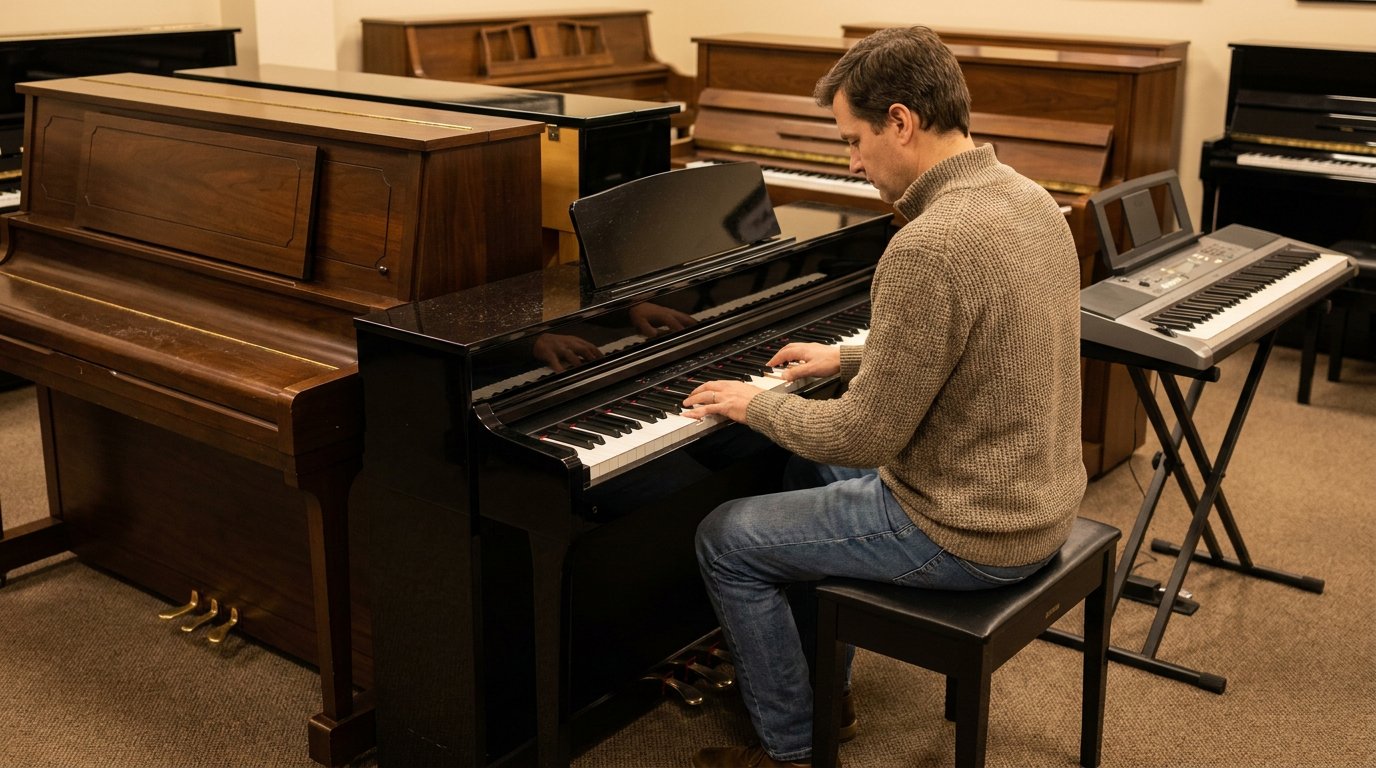
Choose Between an Acoustic Piano, Digital Piano or Keyboard
The best piano for a beginner isn’t always the smallest or least expensive option. If you want to build piano technique, an 88-key digital piano with weighted, touch-sensitive keys is a strong place to start; an acoustic piano offers a traditional playing feel, while an electronic keyboard can suit a tighter space or a more portable setup.
When choosing the best piano for a beginner, weigh more than sound. Key action affects how playing feels, and the number of keys can shape which music you can comfortably learn as your skills develop.
This guide compares acoustic pianos, digital pianos, and keyboards, including what to consider when setting a budget, how weighted keys differ from lighter actions, and which formats work well in limited space. You’ll get a clearer sense of which option fits your musical goals and everyday surroundings.
Key Takeaways
- Choose an acoustic piano for a traditional playing experience, a digital piano for a full-size practice setup, or a keyboard when portability and space matter most.
- Compare sound, touch sensitivity, built-in tones, and polyphony to find a digital instrument that supports your learning goals.
- Try the key action before deciding: weighted keys feel closer to an acoustic piano, while lighter keys make a more portable setup.
- Match the instrument’s size and setup to your room, then explore new and used piano options at Houston Piano Company.
Acoustic Piano, Digital Piano or Electronic Keyboard?
Acoustic pianos produce sound mechanically, while digital instruments use recorded or generated sounds. For a first lesson, compare playing feel, key range, available space, and the music you hope to learn.
Digital Pianos and Electronic Keyboards
An acoustic upright uses less floor space than a grand, while both produce sound through strings and need periodic tuning. A digital piano offers a piano-focused playing experience without acoustic strings. Modern acoustic pianos have 88 keys; a full-size digital piano also has 88. Electronic keyboards often prioritize portability and extra sounds, while portable digital pianos combine a lighter setup with piano-style playing. A 61-key keyboard can get a beginner started, but fewer keys limit range as pieces become more demanding.
For a quick comparison, consider these differences:
| Option | Playing feel | Space and use |
|---|---|---|
| Grand piano | Acoustic | Largest footprint |
| Upright piano | Acoustic | Vertical, home setup |
| Digital piano | Piano-focused | Often portable |
| Electronic keyboard | Varies by model | Portable, flexible sounds |
Digital Piano Features and Beginner Models
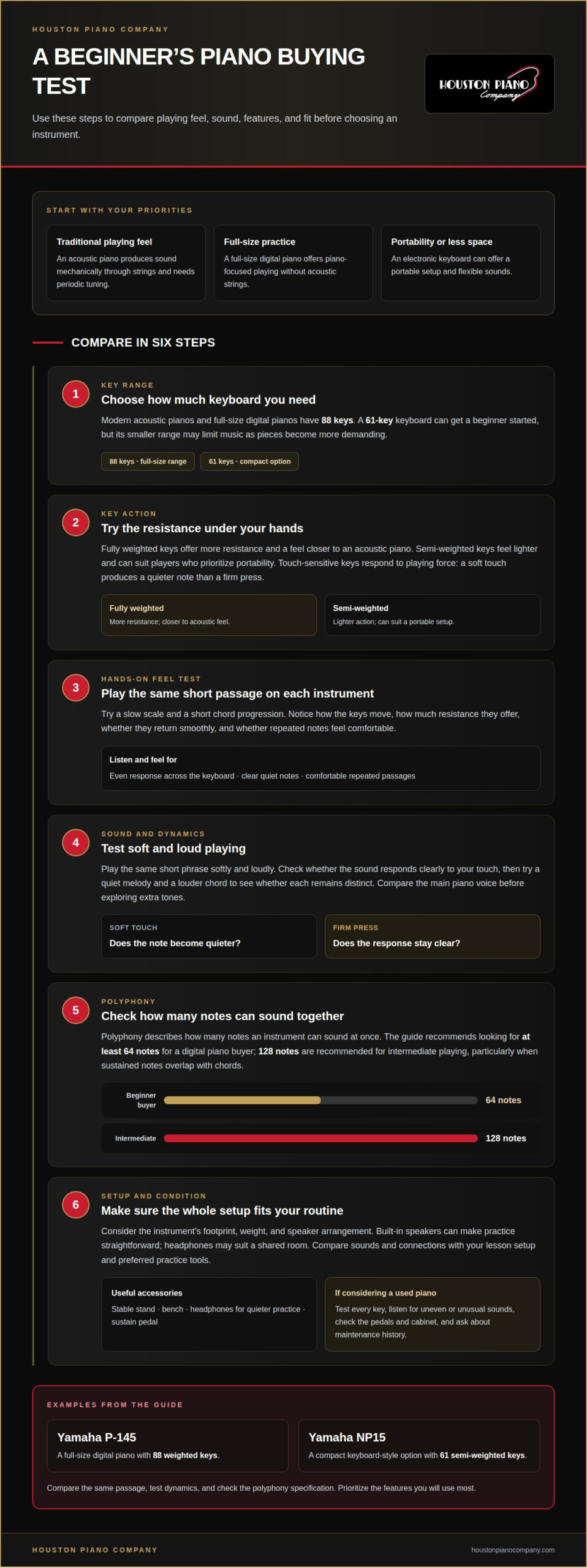
For a full-size beginner digital piano, the Yamaha P-145 has 88 weighted keys. The Yamaha NP15 offers 61 semi-weighted keys, making it a more compact keyboard-style option. A digital piano can also provide alternative tones and connection options. Before buying, compare its available sounds and connections with your lesson setup, headphones, and preferred practice tools.
Acoustic maintenance costs depend on the piano’s condition and the work it needs.
Useful beginner accessories include a stable stand, a bench, headphones for quieter practice, and a sustain pedal. Choose items that fit the instrument and your room.
Before buying a used piano, test every key, listen for uneven or unusual sounds, and check the pedals. Inspect the cabinet and ask about the instrument’s maintenance history.
Choose an instrument whose key range, playing feel, and setup suit your lessons and available space.
How much should a beginner spend on a digital piano?
Set your budget around the features that support regular practice, not the number of built-in sounds. Beginners can focus on a reliable piano voice, responsive dynamics, and enough polyphony for notes to ring together. Fully weighted keys may also matter if you want a feel closer to an acoustic piano.
Test the dynamics by playing the same short phrase softly and loudly. A good piano sound should respond clearly to changes in touch, rather than playing every note at one volume. Try a quiet melody, then a louder chord, and notice whether each remains distinct.
Built-in tones can add variety, but they’re secondary if piano lessons are your main goal. Compare the main piano sound first, then test other sounds you’d actually use. A few useful options can matter more than a long list of tones you rarely explore.
Polyphony describes how many notes an instrument can sound at once. A digital piano buyer should look for at least 64 notes of polyphony. For intermediate playing, 128 notes are recommended, particularly when sustained notes overlap with chords. This specification helps notes continue naturally instead of cutting off too soon.
For the Casio Privia PX-160, judge sound quality by listening to its piano voice and testing soft-to-loud playing yourself. Compare the tone through its speakers and headphones, if available. An Amazon listing or audio clip can help you identify a model, but a recording won’t fully reproduce its sound in your room.
Before buying, make a short comparison: play the same passage on each instrument, test dynamics, and check the polyphony specification. Spend toward the features you’ll use most, rather than paying extra for tones you don’t need. If hearing instruments side by side would help, explore piano options in person.
Weighted keys and key action
Key weight shapes how each note responds as you learn. Compare how the keys move, how much resistance they offer, and whether the action feels comfortable under your hands.
Weighted and Semi-Weighted Keys
Fully weighted keys offer more resistance than semi-weighted keys, creating a feel closer to an acoustic piano. Semi-weighted keys feel lighter and can suit players who prioritize portability. On a grand piano, the keys operate an acoustic mechanism that sets strings vibrating; digital keybeds recreate resistance through different designs. Try both styles with a slow scale and a short chord progression.
Key Action
Key action describes how a key moves and responds when pressed. Touch-sensitive keys respond to playing force, so a soft touch produces a quieter note than a firm press. That control helps beginners practice expression and dynamics. Test a repeated note, a gentle melody, and a firm chord to see whether the response feels even across the keyboard.
Compare the whole setup, not just the keys. A grand piano takes up more floor space than a portable digital model, while an upright stands vertically. Digital pianos vary in weight and speaker arrangement, so consider where the instrument will sit and how you’ll hear it. Built-in speakers can make practice straightforward, while headphones may suit shared rooms.
For a practical comparison, play the same phrase on two instruments. Notice whether the keys return smoothly, whether quieter notes remain clear, and whether a repeated passage feels comfortable. The Yamaha P-145 is one example of a digital piano with weighted keys; compare its action with lighter keyboard keys in person.
Choose the feel that supports your lessons and the music you want to play. If learning acoustic technique is a priority, fully weighted keys offer a familiar starting point. If easy carrying matters more, a lighter action may fit your routine better.
Portable and small-space options
A portable instrument can make practice easier in an apartment, shared room, or flexible living space. Compare the keyboard’s length, weight, and support needs before choosing a spot. A lighter format can also be easier to move between rooms.
Think about your routine, not just the instrument’s footprint. If you’ll move it often, consider whether you can lift and set it up comfortably. A stand gives the keyboard a dedicated playing position, while headphones let you practice without filling a shared room with sound. Your preference for key feel and tone matters, too, so try the instrument before buying.
A compact keyboard may suit early lessons and familiar pieces, but a smaller key range can limit some repertoire. The NP35’s 76 keys offer more range than the NP15’s 61. If you’re working toward advanced pieces, keep that difference in mind as you choose a portable setup.
- For frequent moving: Compare the instrument’s weight and how it will be carried or stored.
- For a shared room: Consider headphones and a stand that can be put away between sessions.
- For longer-term learning: Match the number of keys to the music you expect to play.
Accessories shape the setup, too. A sustain pedal supports connected notes, while a stable stand and suitable bench help create a comfortable playing position. Add only what fits your practice space and routine. You don’t need an expensive instrument to make a compact practice corner useful; choosing a size you’ll play regularly is a practical starting point.
Explore Yamaha piano options to compare portable models and find a setup that suits your room.
Houston Piano Company
Houston Piano Company offers new and used pianos, including Yamaha models, to help beginners compare sound and key action. Consider the instrument’s fit with your space, playing goals, and preferred feel as you narrow your options.
If you’re still deciding, focus on what matters in everyday practice: available space, the music you want to learn, and whether you prefer an acoustic or digital playing experience. These priorities can guide your choice of piano.
Contact Houston Piano Company to discuss your piano options.
Make Your First Piano Part of a Lasting Practice
The best piano for a beginner is one that makes you want to return to the keys. Think about the music you hope to play and where practice can become part of your routine. Those personal details can turn a purchase from a specification comparison into a meaningful first step.
Give yourself room to grow into the instrument. Your first choice doesn’t need to settle every musical question; it should make starting feel inviting and support the way you plan to learn. If you’re unsure which direction fits, Houston Piano Company’s range of new and used pianos gives you options to compare as you decide.
Houston Piano Company offers new and used pianos, including Yamaha options, for beginners exploring a first instrument. Contact Houston Piano Company to talk through your piano choice. Every musical journey begins with a first note, and yours can start whenever you’re ready.
Frequently Asked Questions
What is the best piano for a beginner in 2026?
For many learners, the best piano for a beginner is a full-size digital piano with 88 weighted keys. It offers room to explore a broad range of music and a piano-like touch for lessons. An acoustic upright may suit someone who prefers a traditional instrument and has space for it. Let your goals, room, and preferred playing feel guide the choice.
Best acoustic piano for beginners: upright vs digital
An upright is an acoustic piano; a digital piano is an electronic instrument. An upright suits beginners who want sound produced mechanically and have room for a permanent setup. Digital models can suit more flexible practice routines. Consider where you’ll play, which sound you prefer, and whether acoustic touch matters to you.
How many keys and what type of action should a beginner piano have?
For room to grow, choose 88 keys with fully weighted, touch-sensitive action. That combination supports a wide repertoire and lets playing force shape volume. A 61-key instrument can still help a new learner start, especially when space is tight. If you take lessons, ask your teacher which pieces you’ll begin with, then match the key range to them.
How much does a good beginner piano cost in the United States?
The best piano for a beginner depends on the instrument type, condition, and features you value, so there isn’t one budget that fits every choice. Compare digital, new acoustic, and used pianos according to your priorities. Decide whether portability, weighted action, or an acoustic playing experience matters most. For a used piano, consider its condition and any work it may need.
Can beginners learn piano on a keyboard with fewer than 88 keys?
Yes. Beginners can start on a keyboard with fewer than 88 keys, particularly for basic exercises and early songs. A 61-key model provides a useful starting range, while a 73-key keyboard covers much modern repertoire. As lessons progress, some pieces may call for notes beyond that range, so think about whether you’ll want more keys later.
Digital piano vs keyboard for learning classical piano
A digital piano can be a good fit for classical study because its piano-focused design and weighted action offer a familiar touch. Electronic keyboards often emphasize portability and varied sounds, which can suit other styles. For example, a student practicing scales and classical pieces may value weighted keys and a full range more than extra tones.