
New vs Used Piano: Compare Price, Condition and Value
In a new vs. pre-owned piano comparison, a higher-end instrument that has been owned before may suit you better than a basic new one, while a new piano may be a better fit if you value a fresh start, warranty coverage, and a clearer picture of its history. A pre-owned piano’s age alone doesn’t tell you whether it’s a wise choice; its condition, previous care, playing feel, repair history, and likely upkeep all matter, and hidden wear can affect both performance and the attention it needs after it arrives in your home. This guide will help you weigh quality, condition, sound, warranty coverage, and upkeep, learn what to look and listen for in a pre-owned upright or grand, and decide when the predictability of a new instrument matters more than the potential value of a well-kept older piano.
Key Takeaways
- Weigh a new piano’s warranty coverage and fresh start against the possible value of a higher-quality pre-owned instrument.
- Use a piano’s maintenance and repair history, not age alone, to judge its condition and likely upkeep.
- Listen for an even tone and feel for consistent key response, while looking for signs of wear that may need closer attention.
- Compare a pre-owned piano with a similar new instrument to decide which better fits your playing needs and long-term plans.
How can you evaluate a pre-owned piano yourself?
A new piano typically includes a factory warranty for manufacturing defects, while a pre-owned piano often has no factory coverage. Some used instruments are sold as is unless a reputable dealer includes a warranty. Compare the written coverage and the piano’s condition, not just its age or appearance.
For a new instrument, read the warranty terms before deciding. Identify which defects are covered, how long coverage lasts, and what after-sales support the dealer provides. A warranty can address manufacturing problems, but it doesn’t remove the need to understand routine upkeep. Ask how service concerns are handled and keep the written terms with your purchase records.
For a pre-owned piano, ask whether the sale includes a warranty and what it covers. A dealer’s reputation matters because clear repair records and practical support can make ownership easier. Look for written details about previous repairs and replacement parts. A piano tuned every year is a useful green light during an initial evaluation, but it doesn’t replace a close inspection.
| Option | Warranty | Reliability check | After-sales support |
|---|---|---|---|
| New piano | Factory coverage typically addresses manufacturing defects | Review warranty terms and the instrument’s preparation | Understand the dealer’s process for service concerns |
| Pre-owned piano | May lack factory coverage or be sold as is | Review tuning, repair, and maintenance history | Read any dealer-provided warranty in writing |
| Digital piano | Coverage depends on the instrument’s terms | Compare its features with your playing needs | Read the warranty and support details |
A digital piano is an electronic instrument, not an acoustic piano with strings, a soundboard, and an action. Houston Piano Company carries acoustic and digital pianos, so this guide covers comparing new and pre-owned acoustic and digital instruments.
Choose new when factory coverage and a fresh start matter most. Choose pre-owned when the piano’s documented care, condition, and written warranty support make its history feel clear.
Should I Buy a Lower End New Piano or a Higher End Used Piano?
A higher-end pre-owned piano may offer a more satisfying playing experience, but its history matters. Compare its condition and upkeep with a lower-end new instrument before deciding which better suits your goals.
Used Piano Condition and Maintenance History
Age alone doesn’t determine how a piano performs. A well-maintained 20-year-old instrument may play better than an ignored 10-year-old one. Review its service records, climate exposure, and past repairs, then try pieces that use a range of keys and dynamics. For a used premium piano, maintenance logs can help explain its history. Written repair details also clarify what work was done and which parts were replaced.
Tuning History and Stability
Tuning records can offer clues about an instrument’s care. Ask when it was last tuned and whether it has had trouble holding pitch. During a playing test, listen for notes that sound noticeably different from their neighbors. A professional evaluation can help clarify whether concerns warrant closer attention.
Delivery, Tuning, and Repair Planning
Plan for the piano’s size, the route into your home, and its condition after arrival. A grand and an upright present different moving considerations, while repair needs depend on the instrument’s wear and previous work. For a private-sale piano, arrange its evaluation before delivery so you understand what attention it may need. A side-by-side piano comparison can also help you judge its playing feel against another instrument.
Brand, Model, Age, and Resale Value
Brand and model can shape sound and construction, but age doesn’t establish quality on its own. A piano’s condition, repair history, and restoration work also matter. For a used luxury acoustic piano, resale value depends on model and size, age, condition, and restoration quality, according to Wikimedia Foundation. Compare those factors with your playing needs, rather than treating a familiar name or newer date as a guarantee of a better instrument.
Buying a Pre-Owned Upright or Grand Piano: What to check?
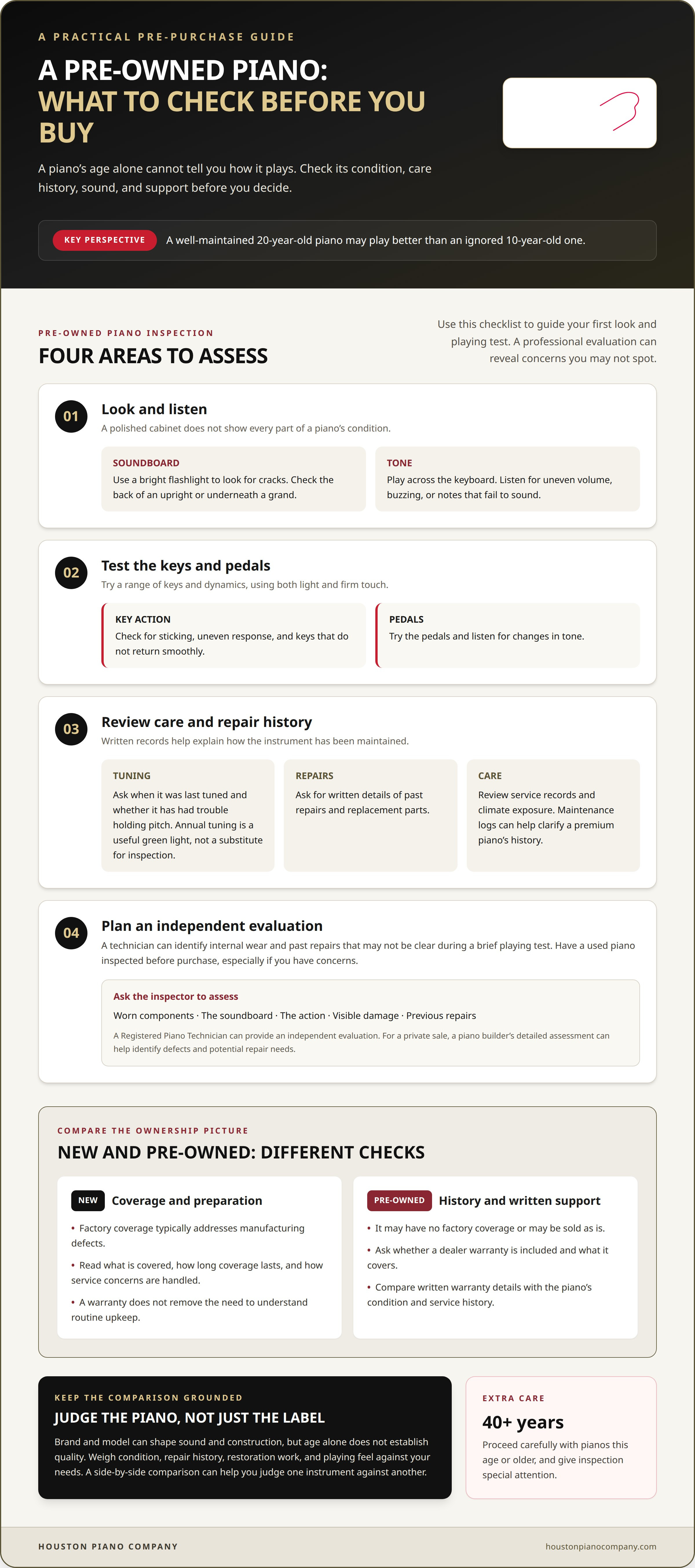
A polished cabinet does not reveal every aspect of a piano’s condition. Before buying, assess the sound and keyboard response, and have a professional evaluate the instrument if you have concerns. For a private sale, a piano builder’s detailed assessment can help identify defects and potential repair needs.
Look and Listen Before Buying
Use a bright flashlight to look for visible soundboard cracks. On an upright, inspect the soundboard from the back; on a grand, look underneath. Play across the keyboard and listen for uneven volume, buzzing, or notes that fail to sound. Press each key gently and firmly to check for sticking, uneven response, or keys that do not return smoothly. Try the pedals and listen for changes in tone.
A technician can find internal wear and past repairs that aren’t obvious during a brief playing test. Have a used piano inspected before purchase, with attention to worn components, the soundboard, and the action. A Registered Piano Technician can provide an independent evaluation. When buying privately, a piano builder’s detailed assessment can add useful context about defects and potential repair work.
- Soundboard: Look for cracks with a flashlight, checking the back of an upright or underside of a grand.
- Tone: Play notes across the keyboard and listen for unevenness, buzzing, or silent keys.
- Action: Test whether keys move consistently, return smoothly, and respond to both light and firm touch.
- Structure: Note visible damage and ask the inspector to assess wear and previous repairs.
Age can make a closer inspection especially useful. Proceed carefully with pianos that are 40 years old or older. Some antique English uprights, including cottage pianos, lack the modern cast-iron frame that helps a piano stay in tune. That difference makes a technician’s assessment particularly valuable.
A new piano also deserves a practical playing check. Test every key and pedal, listen across the keyboard, and look for visible damage. These checks help you assess basic response, but they are not a substitute for a professional evaluation if you notice a concern.
Comparing used pianos with new instruments
A new vs used piano comparison starts with musical performance, not the new or used label. A well-kept, higher-quality pre-owned piano can offer stronger tone, action, and build quality than a basic new model. The Yamaha U1 is one example of a premium-brand used piano that may outperform lower-end new instruments in those areas.
Compare a used piano with the same model or a similar new instrument. Play both, listen across the keyboard, and notice how the keys respond to soft and firm touch. This helps separate a model’s character from the effects of wear. A pre-owned piano that sounds pleasing on its own may feel different beside an instrument with a more consistent response.
Consider how long you expect to keep the piano. Some buyers favor used instruments when their plans extend five years or less, since a pre-owned piano may depreciate less over that period. A new piano can make sense for a longer horizon: some buyers find new and used options work out similarly when ownership lasts seven to eight years, while those keeping a piano for 12 or more years may prefer new.
New instruments offer a clear starting point, though they may need voicing, tuning, or regulation during the first year. A prepared instrument can reduce early adjustments. A used piano may already be broken in, but past use can affect key touch, and hidden problems can change the experience after purchase. For your new vs used piano decision, weigh the instrument’s condition and playing response ahead of its cabinet’s age or appearance.
Use this decision guide:
- Choose new if a fresh start and a longer ownership plan matter most.
- Consider used if a stronger model’s tone and action suit your playing and its condition is sound.
- Compare both instruments directly, then choose the one whose sound, touch, and upkeep fit your plans.
Houston Piano Company
Houston Piano Company offers Houston’s only side-by-side comparison of most piano brands, making it easier to compare new and pre-owned instruments in person. Play and listen to different options to see which sound and feel suit your needs.
Explore options across New Pianos and USED PIANOS, including KAWAI and Baldwin instruments. For a pre-owned piano, technician checks before sale can help you consider its condition alongside its sound and response. Comparing models in person also makes differences in touch and tone easier to notice than relying on a description alone.
Visit Houston Piano Company to compare new and pre-owned pianos and talk through what you are looking for.
Choose the Piano That Invites You to Play
The best choice is the instrument that makes you want to return to the keyboard. Picture an ordinary week at home: a student practicing after school, a family sharing favorite songs, or you finding a quiet moment to play. That everyday connection can matter as much as the details on a piano’s history. Consider who will play, what music they enjoy, and whether the instrument feels welcoming under their hands.
Give yourself room to make the decision at your own pace. Houston Piano Company’s piano team can help you consider how an instrument fits your musical goals and home routine. Bring your questions, listen closely, and notice which piano feels like a natural companion for the music you hope to make. The right choice can turn practice into a pleasure and give your family a reason to gather around the keys.
Talk with Houston Piano Company about choosing an instrument that suits your next chapter in music.
Frequently Asked Questions
What are the pros and cons of buying a new piano versus a used piano?
A new piano gives you a clear ownership starting point, while a pre-owned instrument may have a longer playing history to consider. Your choice also depends on how familiar you are with piano care and how much guidance you want during selection. For a first-time buyer, compare the written warranty terms and available purchase support, not just the instrument’s sound in a brief trial.
How can you compare the condition and features of new and pre-owned upright pianos?
There’s no single standard condition for an upright. The model, brand, condition, and included warranty all influence what you’ll encounter. For a useful comparison, focus on similar upright models and ask what features and preparation are included. That helps you compare like with like instead of judging instruments by a broad category alone.
How can you compare the condition and warranty coverage of new and pre-owned grand pianos?
Grand pianos vary by model, size, brand, condition, and restoration history. A restored grand and an unrestored instrument aren’t directly comparable, even if they share a maker’s name. Narrow your comparison to similar models and sizes, then consider the instrument’s documented work and warranty terms. This gives you a clearer basis for judging the options without relying on a general category figure.
What should you inspect when buying a used acoustic piano?
Beyond the instrument itself, consider whether it fits your home and playing plans. Measure the intended location and the route from the entrance, including tight turns and stairs. Check that household members can comfortably reach the keys and pedals. If you’re choosing for a student, consider whether the instrument will suit ongoing lessons as skills develop, rather than only the first stage of playing.
How can you check a used piano’s tuning stability, action, soundboard, and strings?
Tuning stability is about whether a piano holds pitch over time; action describes how the keys respond under your fingers. A visual look at the soundboard or strings cannot establish the condition of every internal part. If you are unsure about a specific symptom, ask a piano technician to interpret it before purchase.
How often does a new or used piano need tuning after purchase?
Houston Piano Company recommends tuning at least every six months, with four times a year described as ideal for Houston’s climate. A new instrument may also need early adjustments as it settles into its home environment. Keep a tuning record and share it with the technician, especially after a move or a noticeable change in the piano’s sound.