
Used Piano Inspection: Check Its Condition Before Buying
A polished cabinet can look reassuring, but a piano’s history and inner condition matter just as much. A used piano inspection checklist should cover the cabinet and finish, tuning pins, bridges, action, hammers, dampers, and available maintenance records, while also testing how evenly the keys respond when you play softly and loudly. You’ll learn what to look and listen for in each area, which past repairs and service details can help explain the instrument’s condition, and when a technician’s assessment can clarify concerns that are difficult to judge by sight alone.
Key Takeaways
- Look beyond the cabinet: signs of wear in the bridges, tuning pins, and action can reveal issues that a polished exterior won’t show.
- Play softly and loudly, and notice whether keys respond evenly, return smoothly, and produce a clear, controlled sound.
- Ask what repairs and maintenance have been completed; specific records can help you understand the piano’s history and future needs.
- Compare a pre-owned piano with new options in person, and use a technician’s assessment to better understand its condition.
Checking tuning pins, bridges, action centers, and repair records
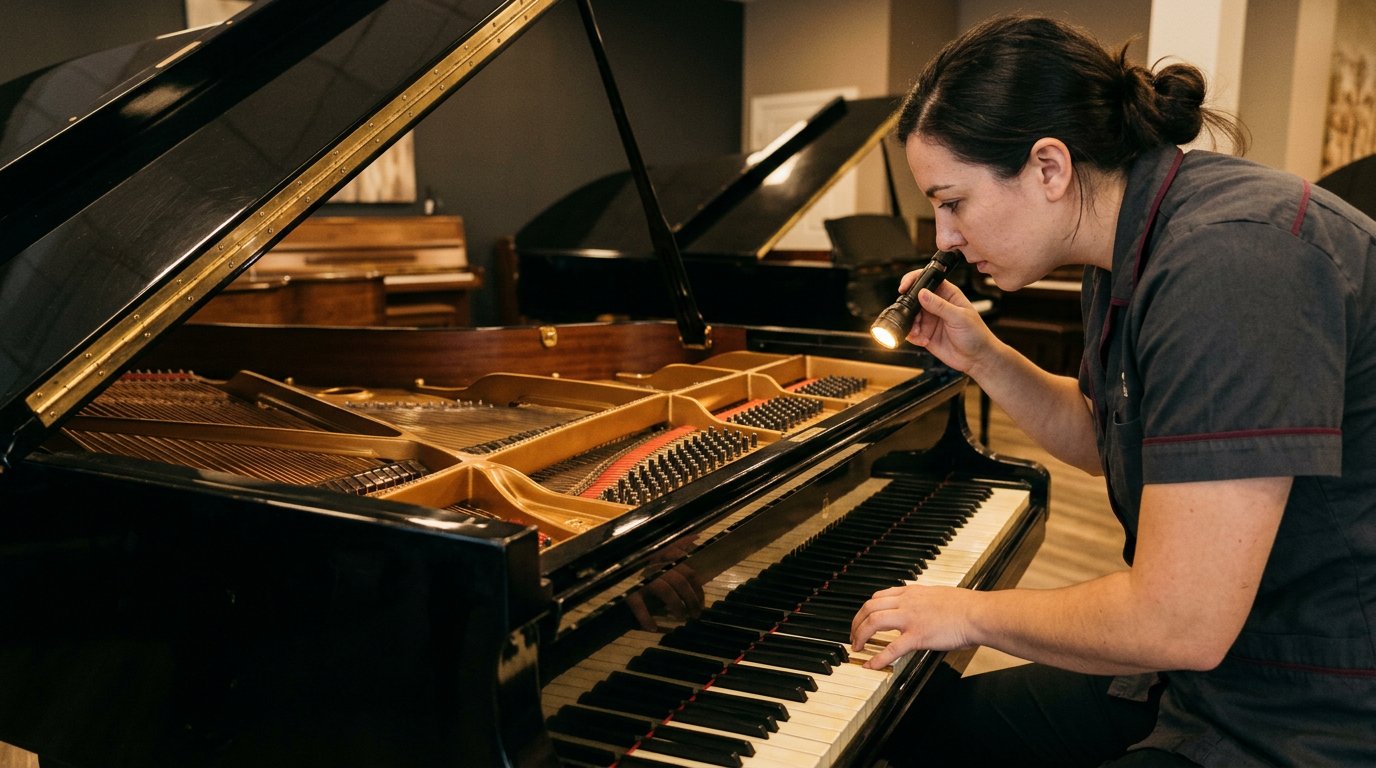
To inspect a used piano’s keys, action, pedals, and soundboard, play several notes softly and loudly, listening for uneven response. Check for sticky keys, sluggish returns, excessive side-to-side movement, chipped keytops, and inconsistent pedals. Look for visible damage or signs of shifting on the soundboard, bridges, and pinblock. A technician can assess structural details that are hard to judge by sight.
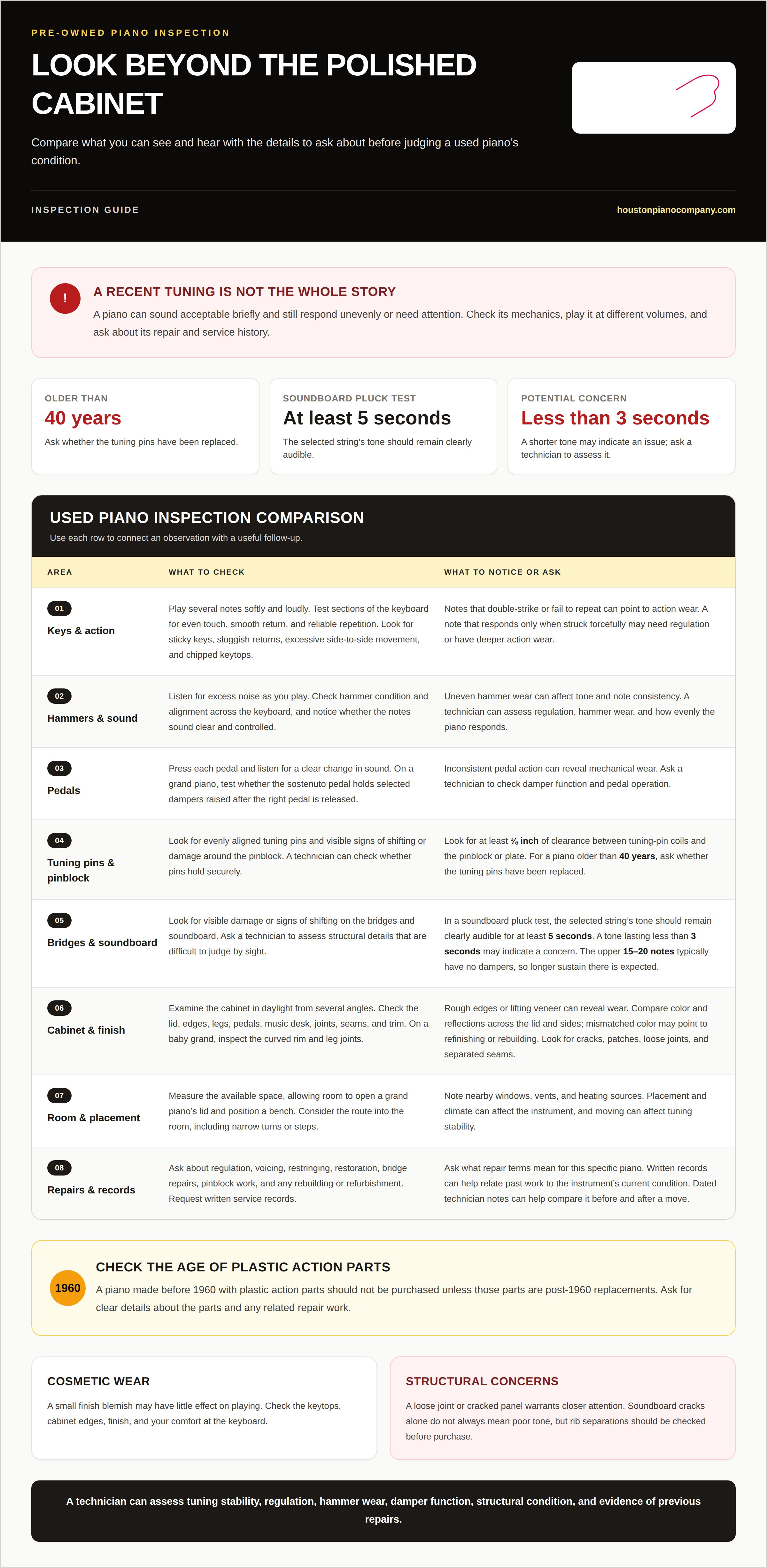
Use this part of your used piano inspection checklist to look beyond the cabinet’s finish. Tuning pins should appear evenly aligned, while the bridges should look stable and free of obvious damage. On a piano older than 40 years, ask whether tuning pins have been replaced. A recent tuning alone does not establish that the instrument will hold its tuning.
- Test each section of keys for even touch, smooth return, and reliable repetition; notes that double-strike or fail to repeat can point to action wear.
- Listen for excess noise as you play; a note that responds only when struck forcefully may need regulation or have deeper action wear.
- Check hammer condition and alignment across the keyboard; uneven wear can affect tone and the consistency of notes.
- Press each pedal and listen for a clear change in sound; inconsistent pedal action can reveal mechanical wear.
Ask which repairs the piano has had, including regulation, voicing, restringing, or restoration. If it was rebuilt or refurbished, ask what those terms mean for this instrument. Written service records can help relate past work to its current condition.
Pay special attention to older action parts: a piano made before 1960 with plastic action parts should not be purchased unless those parts are post-1960 replacements. Ask about bridge repairs and pinblock work, since these affect the piano’s structure and tuning stability. Clear repair details make it easier to judge how the instrument has been maintained.
Cabinet condition, finish, and placement
Examine the cabinet in daylight from several angles. Check the lid, edges, legs, pedals, and music desk for chips, loose joints, or separated seams. On a baby grand, inspect the curved rim and leg joints for cracks, patches, or a finish that differs from nearby panels. Compare the reflections and color across the lid and sides, since a polished surface can make repairs harder to spot.
Check the room before deciding whether the piano will fit. Measure the available space, allowing room to open a grand piano’s lid and position a bench for comfortable playing. Note nearby windows, vents, and heating sources, as placement and climate can affect the instrument. Consider the route into the room as well, since narrow turns or steps may complicate moving the piano.
- Run your hand lightly over cabinet edges and trim; rough spots or lifting veneer can reveal wear.
- Look at the keyboard from the player’s position; uneven key height or chipped keytops affect feel and appearance.
- Compare the finish on the cabinet’s front, sides, and lid; mismatched color may point to refinishing or rebuilding.
- Note visible cracks around joints or panels; their location and surrounding condition help explain what needs closer assessment.
Cosmetic wear and structural concerns are different. A small finish blemish may have little effect on playing, while a loose joint or cracked panel warrants closer attention. Soundboard cracks alone do not always mean poor tone, but rib separations should be checked before purchase.
Finally, sit at the keyboard and play a short passage. Notice whether the keytops feel secure beneath your fingers and whether the hammers strike consistently across the notes. Compare how the piano feels in its current setting with how you expect to use it at home. The cabinet, finish, room placement, and playing comfort all help you judge whether the instrument suits your space and routine.
Tuning pins, regulation, hammer wear, and damper function
A useful assessment looks at how the piano’s parts work together, not just whether it plays. A technician can examine the pinblock, tuning stability, regulation, hammer wear, damper function, and structural condition. A piano may sound acceptable briefly yet respond inconsistently across the keyboard, so the assessment should consider both its mechanics and how it plays.
Clarify what the assessment covers, including whether it examines the action, soundboard, and evidence of previous repairs.
- Look for at least ⅛ inch of clearance between tuning-pin coils and the pinblock or plate; a technician can assess whether the pins hold securely.
- During a soundboard pluck test, the selected string’s tone should remain clearly audible for at least five seconds; a tone lasting less than three seconds may indicate a concern.
- Remember that the upper 15-20 notes typically have no dampers; their longer sustain is expected.
- On a grand piano, the sostenuto pedal should hold selected dampers raised after the right pedal is released.
Minor regulation adjustments can often address isolated inconsistencies, while widespread unevenness may point to deeper wear or deferred maintenance. Ask the technician to distinguish an adjustment from structural repair and explain which findings affect the piano’s stability or performance.
Moving can affect tuning stability, so include the planned move in your assessment. Dated technician notes provide a useful record for comparing the instrument before and after relocation.
A trained piano technician can assess tuning pins, regulation, hammer wear, damper function, structural integrity, and evidence of previous repairs. A used piano may be playable yet still need regulation, voicing, tuning stabilization, or climate-related correction, so playability alone does not establish that its condition is settled. Assess tuning stability rather than relying on a recent tuning alone.
When evaluating a used piano, consider moving, tuning, possible regulation, humidity control, and immediate repairs alongside the technician’s assessment to understand what the instrument may require after purchase. Its current sound or a recent tuning does not provide a complete picture of its condition.
Maintenance records and piano history
Service records offer practical clues about a piano’s present condition. Look for dated notes on tuning, adjustment, voicing, restringing, restoration, and moving. Repeated work on the same strings or bridge pins may help explain current sound or tuning concerns. Missing paperwork does not prove neglect, but it provides less evidence of how the piano was maintained.
To estimate a piano’s age, locate its serial number and use it to identify the instrument’s manufacturing period. A serial number is usually four to eight digits long. Do not mistake three- or four-digit manufacturing-process numbers on case parts for the serial number.
Buying without an inspection can leave structural, mechanical, or sound issues undiscovered. A piano may play during a brief visit yet have bridge separation, unstable tuning, or action wear that becomes clearer under closer assessment.
Ask the seller what work was completed, when it was done, and what may need attention later. If the piano is described as “rebuilt” or “refurbished,” ask which parts were repaired or replaced and what those terms mean for this instrument. Ask how it was assessed, whether a technician examined it, and whether records document the work.
Keep the seller’s answers together with dated notes from your own playing. Record specific concerns, such as a weak-sounding note or uneven pedal response, then compare them with the service history. A technician can assess whether an issue relates to regulation, strings, bridge-pin condition, or structural separation. This approach helps distinguish documented maintenance from cosmetic changes and gives you clearer grounds for a buying decision.
Houston Piano Company
Houston Piano Company helps buyers use inspection findings to make a considered decision. When weighing a pre-owned piano, consider its condition and service history alongside how it feels under your hands. Houston Piano Company inspects its used pianos before sale, giving you a practical starting point for comparison. Bring your observations about the cabinet, keys, action, and maintenance history into the decision.
For buyers in Houston, The Woodlands, Clear Lake, Conroe, The Heights, Fort Bend, Katy, and Pasadena, comparing a used piano with new models can clarify which instrument suits your playing plans. Consider sound, touch, size, and condition together rather than letting one appealing feature decide for you. Houston Piano Company offers new and used pianos for side-by-side comparison.
Brand preference may also shape your search. Houston Piano Company offers Yamaha and other premium new and used options. Apply the same listening and playing criteria to each instrument: try soft and loud passages, compare key response, and notice how each piano feels. This makes the comparison more useful than relying on appearance or reputation alone.
If a piano’s history raises questions, focus on documented repairs, completed maintenance, and areas needing attention. Houston Piano Company can guide you through model selection and the buying process, helping you weigh your findings against your musical needs. A thoughtful comparison gives you time to choose an instrument that fits your home, experience, and goals without rushing.
Contact Houston Piano Company to talk through your piano search.
Frequently Asked Questions
What should I check on a used piano before buying it?
Bring music you know and play long enough to see whether the piano suits your habits, not just your first impression. Note what feels comfortable and what distracts you. If possible, review your notes after a pause before deciding. A calm comparison can help separate lasting preferences from the excitement of trying an unfamiliar instrument.
How can I check a used piano for cracks, water damage, pests, or mold?
Use a flashlight to inspect the floor around and beneath the piano, along with accessible cabinet seams and lower panels. Look for water stains, swollen wood, visible mold, insect debris, or a persistent musty odor. Check whether suspicious marks are localized or spread across nearby surfaces. Avoid disturbing the piano’s internal parts, and photograph anything concerning for closer assessment.
How do I inspect piano strings, tuning pins, bridges, and hammers?
Keep your hands and tools away from strings and internal mechanisms. Instead, observe the accessible interior with a flashlight and listen for notes that sound noticeably different from nearby ones. Record the affected key and what you hear. Strings and bridges can be difficult to assess by appearance alone, so use your observations to guide a more informed evaluation.
What does a piano technician check during a pre-purchase inspection?
A technician can explain how the piano’s condition affects playability and distinguish immediate concerns from items to monitor. Ask for findings in plain language, including which observations are visual and which come from playing or testing. A written summary can help you compare the assessment with the seller’s account and keep a clear record of the piano’s condition.