
Compare Piano Brands by Sound, Touch, and Player Needs
The most celebrated piano brand isn’t automatically the right one for your home. When you compare piano brands, the best fit depends on how sound, touch, size, and playing goals come together.
It makes sense to start with familiar names such as Yamaha, Kawai, and Steinway, but reputation alone won’t tell you whether an upright or grand feels comfortable under your hands, suits a beginner’s practice, or gives an experienced player the response and tone they want. This guide explains how brands differ, including Yamaha’s versatile, consistent sound and Kawai’s warmer tone, then considers which options may suit beginners, students, and professionals. You’ll also find practical ways to compare acoustic uprights and grands, new and pre-owned instruments, and the details that matter when choosing a piano for home, lessons, or performance.
Key Takeaways
- Use model range and playing experience to narrow the field, rather than choosing by brand reputation alone.
- Notice how materials and construction shape an instrument’s character and the way it responds under your hands.
- Let the piano’s role, whether for lessons, home playing, recording, or performance, guide your shortlist.
- Hear and feel the differences side by side to make a more confident choice between acoustic instruments.
What Are the Best Piano Brands for Beginners and Professionals?
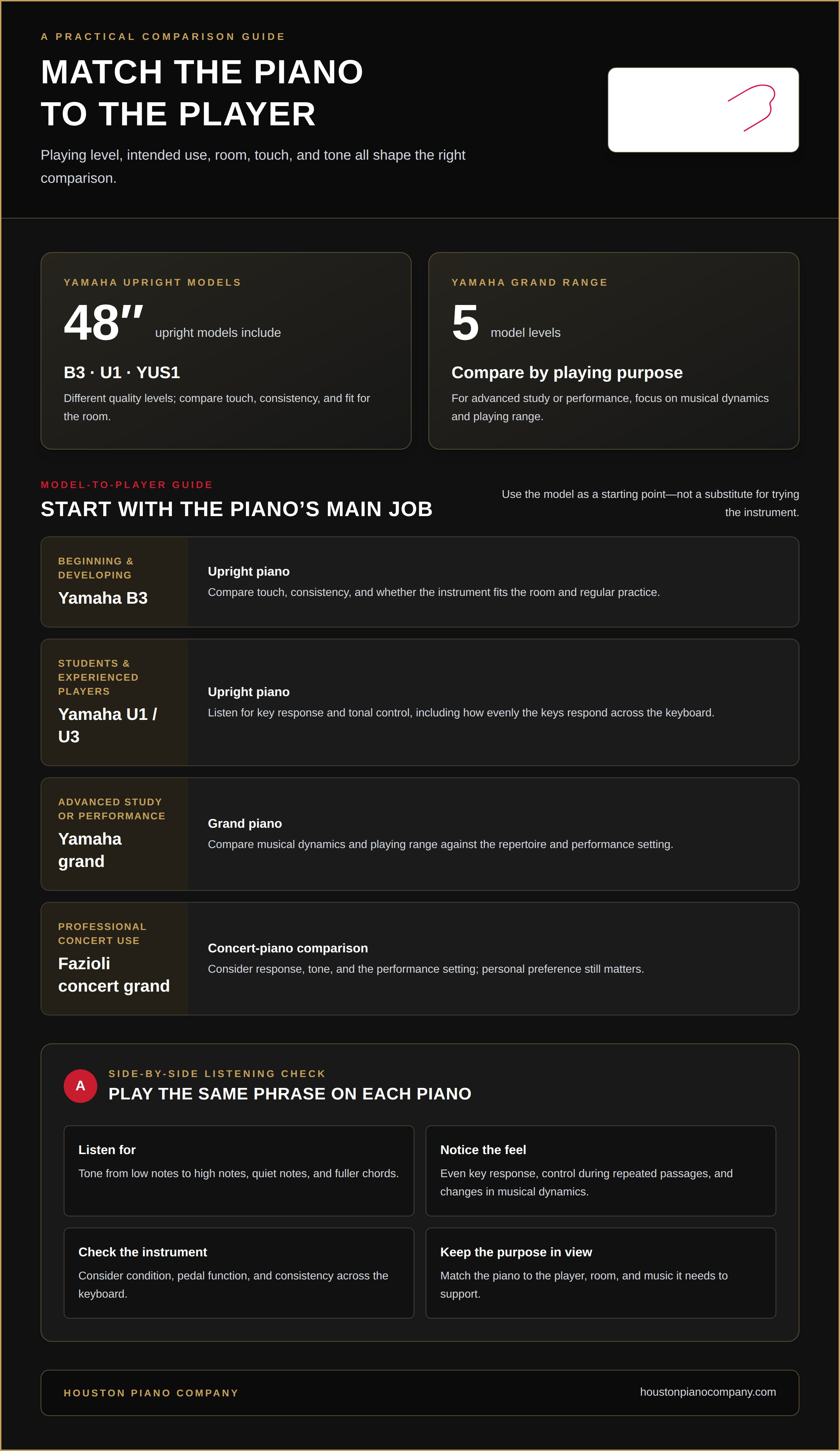
For beginners, an upright from Yamaha, Baldwin, or another established maker can provide a practical acoustic starting point. Yamaha offers 48-inch upright models including the B3, U1, and YUS1, which represent different quality levels. For professionals, a responsive premium upright or grand may better suit demanding repertoire, teaching, or concert work. Yamaha’s U1 and U3 are benchmark upright models, while its grand range spans five levels.
Brand is only one part of value. When you visit Houston Piano Company, compare key response, condition, musical dynamics, and how each instrument supports your playing. A beginner may value consistency and a comfortable touch; an advanced player may prioritize precision, a singing tone, and control across the keyboard. Fazioli is another name you may encounter in concert-piano comparisons, but personal preference still matters.
| Option | Typical player fit | Comparison focus |
|---|---|---|
| Yamaha B3 upright | Beginning and developing players | Touch, consistency, and room fit |
| Yamaha U1 or U3 upright | Students and experienced players | Key response and tonal control |
| Yamaha grand | Advanced study or performance | Musical dynamics and playing range |
| Fazioli concert grand | Professional concert use | Response, tone, and performance setting |
Choose by playing level, intended use, room, and the touch and tone that feel right to you, rather than by brand name alone.
Maintenance and repair needs depend on a piano’s condition, use, and service history, while warranty terms depend on the instrument and its sale terms. For a used piano, age, inspection findings, and previous work help indicate reliability. Resale interest can also depend on condition, model, and local demand.
For beginners, an entry-level upright or digital piano can be a practical choice, while professionals may prefer a grand or premium upright.
These different models offer context when comparing instruments by playing level and intended use. Compare how each piano feels and sounds, including its touch, tone, and suitability for your playing.
Brand Sound and Construction Characteristics
Yamaha and Kawai offer acoustic pianos across different model tiers, so a brand name alone doesn’t define the playing experience. Yamaha is often described as versatile and consistent; Kawai’s K series is noted for touch and tone. Compare equivalent upright or grand models by playing soft notes, repeated passages, and changes in musical dynamics. The same short passage can make tonal and response differences easier to notice.
Action is the mechanism that transfers a key press to the hammer and strings. While trying Yamaha and Kawai models, notice whether keys respond evenly across the keyboard and whether quiet notes feel controllable. Reliability depends on the individual instrument’s condition and care, not simply its maker. The brands offer different model tiers, so compare instruments of similar type and intended use rather than treating a name as a complete description.
Steinway, Bösendorfer, and Fazioli are premium brands, but their names don’t establish a universal ranking. Bösendorfer is known for a distinctive tone color; with Steinway and Fazioli, focus on the particular piano’s response and the sound you prefer. For advanced playing, the useful question is how each instrument supports your repertoire, from delicate passages to fuller chords.
A piano specialist can compare model condition, key response, pedal function, and consistency across the keyboard. They can also listen for changes in tone from low notes to high notes and assess whether the action responds evenly. Try the same musical phrase on each instrument, including quiet notes and repeated chords. This helps separate personal preference from differences in setup or condition, giving you a more grounded comparison than brand reputation alone.
Choosing a Piano by Player Type and Use
Start with the piano’s main job. A child practicing at home, a teacher demonstrating lessons, and a performer preparing concert repertoire place different demands on an instrument. For a beginner, ease of control during simple scales and short pieces may matter most. A more experienced player may need an instrument that supports a wider range of repertoire and expressive choices.
Think about where and how the piano will be played. For shared family practice, an upright may fit the room and routine better. A recording setup may call for an instrument whose sound works well in that space. For performance, a grand can suit the setting, but the specific model and the pianist’s preferred response remain central.
- Beginning student: Choose a model that feels manageable during lessons and regular practice.
- Intermediate player: Match the instrument to the repertoire and technique the student is developing.
- Teacher or recording musician: Consider how the piano serves demonstrations, repeated sessions, or recording in its intended room.
- Professional performer: Compare instruments such as a Yamaha CFX or Steinway grand in the context of the repertoire and venue.
Brand and model can help narrow a shortlist, but the use case should guide the final comparison. A concert instrument may be more than a home student needs, while a developing pianist may outgrow a limited practice setup. Consider the player’s current goals alongside the kind of music they hope to play next.
To decide, match the piano’s format and model to the player, room, and primary use. Then compare how each candidate serves that purpose through the music the player actually practices, teaches, records, or performs.
Acoustic Piano and Grand Piano Brand Comparisons
Acoustic pianos include both uprights and grands, so compare instrument type alongside brand. An upright can suit home practice where space matters; a grand’s horizontal strings and soundboard shape its response and projection. These design differences influence character, but they don’t guarantee a particular tone. For advanced players, listen for how each piano handles soft phrasing, quick passages, and fuller chords. When you compare piano brands, keep the instrument’s format and intended use in view.
Japanese makers such as Yamaha and Kawai offer acoustic uprights and grands, while European makers include Steinway, Petrof, and Bechstein. Steinway’s Model B measures 211 cm long, showing how a grand’s size affects room fit as well as sound. Boston and Essex pianos are designed by Steinway and manufactured in Asia. Country of manufacture offers useful context, but it can’t tell you exactly how an individual piano will sound.
German piano heritage adds another point of comparison. Perzina pianos are handcrafted German instruments known for durability and a warm, rich tone. That description can help you form an initial preference, not decide for you. Japanese and European instruments can differ in character, yet tone also varies by model, condition, and room. Another way to compare piano brands is to listen to the actual instruments, not rely on national or brand labels.
For a useful side-by-side test, play the same short passage on each piano. Include a quiet melody, repeated notes, and a strong chord. Listen for clarity and a singing tone, then notice how the keys respond. Match a grand’s dimensions to your room and intended use. The takeaway is simple: maker and origin can guide your shortlist, but the individual piano’s sound, touch, and fit should guide your choice.
Houston Piano Company
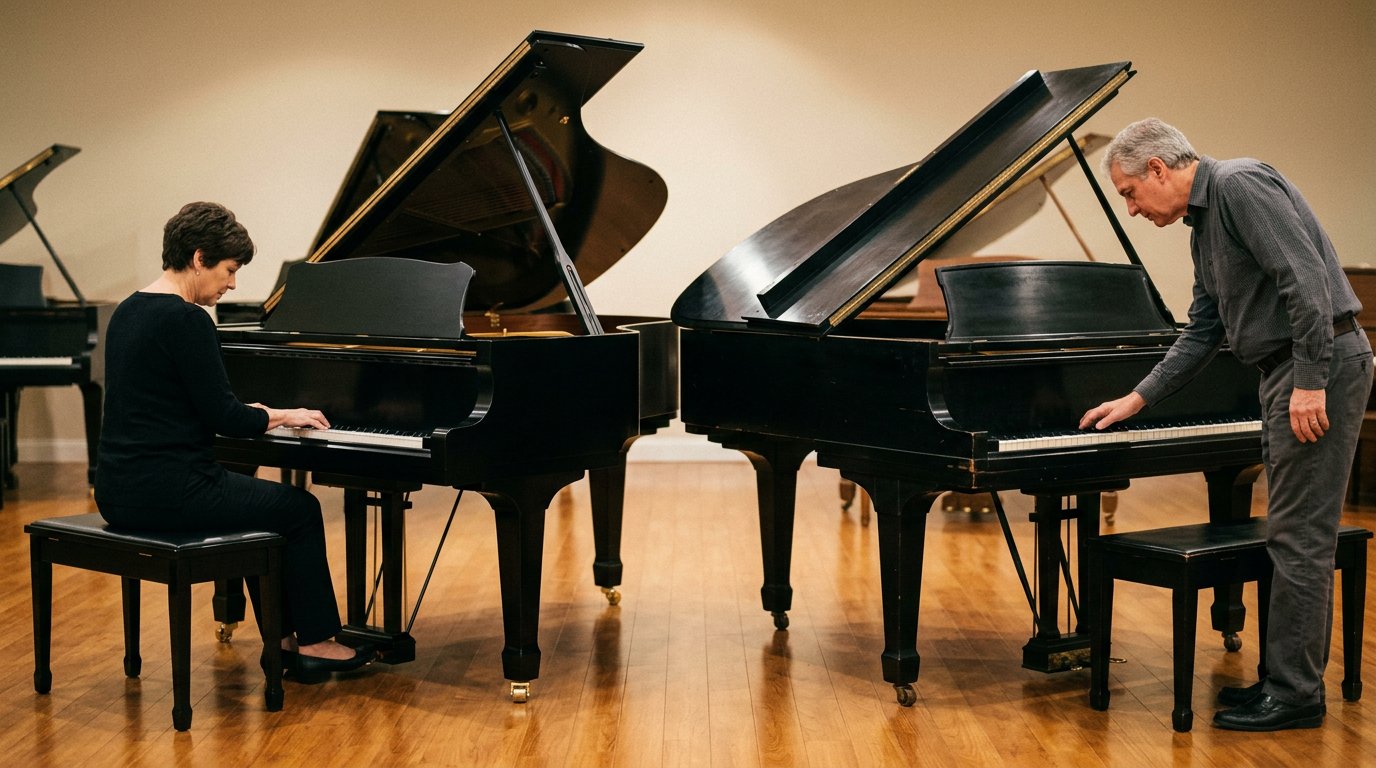
Houston Piano Company offers Houston’s only side-by-side comparison of most piano brands in its Houston showroom. Compare new and pre-owned pianos, hear how different instruments sound, and feel how their keys respond. This hands-on approach makes it easier to distinguish brand reputation from your own preferences.
Yamaha and Steinway options provide familiar reference points across different models and playing needs. As you compare, the team can help you consider models based on your experience, intended use, and preference for an upright or grand. Share whether the piano is for lessons, family practice, or more advanced playing, then see how each instrument’s sound and touch fit that purpose.
- New pianos: Compare Yamaha and Steinway choices alongside other available instruments.
- Pre-owned pianos: Consider individual piano condition as well as brand and model.
- Hands-on comparison: Listen to tone and try key response across the instruments.
- Buying guidance: Get help narrowing model choices and arranging delivery.
Pre-owned pianos are inspected before sale, including technician checks. That review adds useful information to your comparison, since an individual instrument’s condition matters alongside its maker. A side-by-side visit also lets you return to a preferred model and compare its sound and touch with another option, rather than relying on descriptions alone.
Houston Piano Company offers a welcoming place to explore these differences at your own pace. If you’re choosing a piano for a student, your home, or your own playing, visit the showroom to compare instruments and shape a shortlist around what matters most.
Contact Houston Piano Company to discuss your piano comparison.
Frequently Asked Questions
Which piano brands are considered the best for acoustic grand and upright pianos?
Yamaha, Kawai, Steinway, Baldwin, and Petrof are established names to consider across acoustic piano categories. The right choice depends on the particular model and how its touch and tone suit your playing. Whether you’re comparing an upright in Houston or a grand for a larger room, compare specific instruments rather than assuming every piano from one brand feels alike.
What are typical new piano prices by brand and piano type in the United States?
There isn’t one typical figure that applies across brands and piano types. An upright and a grand are different categories, and models within a brand can also differ. For a useful comparison, narrow your choices by format and intended use first, then consider individual models. This keeps the decision focused on instruments that fit your playing and space.
How do piano brands compare for beginners, intermediate players, and professional pianists?
Beginners can start by comparing Yamaha and Kawai uprights for a comfortable touch and dependable practice. Intermediate players may want models that respond well as their technique and repertoire develop. Professionals can compare concert-level grands from makers such as Steinway, Bösendorfer, and Yamaha. In every group, the best match depends on the player’s repertoire, preferred response, and playing setting.
Which piano brands offer the best value and resale value?
No brand guarantees the best value or resale outcome. A piano’s condition, model, service history, and demand all affect how it performs as a long-term choice. For pre-owned instruments, compare the individual piano rather than relying on its maker’s name alone. Houston Piano Company offers industry-standard warranties on new and used pianos, which can be one factor in your decision.